More stories coming soon
New ideas brewing. Check back soon for fresh perspectives.
This is where I post my raw thoughts, and dig into rabbit holes that make me curious. Publishing here should keep me accountable, bare minimum commitment to explore, research, and sometimes just think out loud.
These posts are the seeds of my own understanding, planted here to see what they grow into.
New ideas brewing. Check back soon for fresh perspectives.
This isn't one of those "I found my passion and followed it relentlessly" stories.
It is something messier.
Back in my first year of college, I was almost stubbornly sure that I wanted to pursue Data Science. I had this solid image in my head. I would learn Python, solve real-world problems, and build smart systems.
And I started off with a lot of curiosity.
But then, life happened. Or maybe learning happened. Or maybe growing happened.
I hit a pause in learning Python. Just a small break. But when I came back, the spark wasn't quite there. There was resistance. It was the kind you feel when you know you should be studying, but everything in you says "not now."
And this is where it gets complicated.
While I haven't given up on becoming a data scientist, something else has started growing in me. I found a love for organising. I like building things beyond code, like events, communities, and ideas. I enjoy working with people and putting together pieces that don't always come from a dataset.
Now I am in the middle of this odd mix of directions.
One part of me still wants to code and build models.
Another part wants to brainstorm with teams and lead something that doesn't sit behind a screen.
And somewhere in between, there is a voice asking a question. What if I'm not meant to pick just one?
Right now, it feels like I'm going nowhere.
But maybe that is just what it feels like when you are slowly becoming someone new.
So no, I haven't ditched the dream. But I'm not chasing it blindly either.
And writing this cleared absolutely nothing(shittttttttttttttttttt)
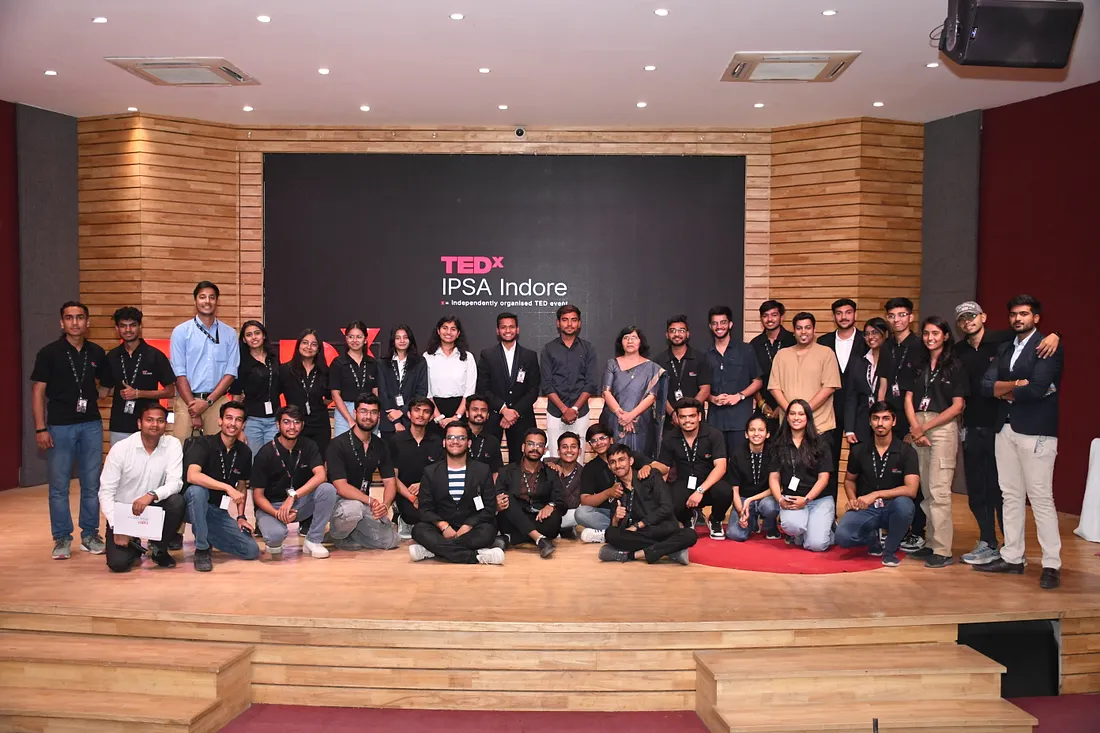
When I joined a student club, I thought I would be folding posters and running small tasks.
Fast forward a few months, and I found myself planning a full event. I was deciding budgets, calming panics at 2 a.m., and pitching the idea to people who could make it real.
Those messy hours taught me more about decision-making than any case study ever could.
1. How to make things happen: Classroom theory is clean. Execution is messy. Clubs force you to execute. You learn to plan, to divide work, and to adjust when things break. You learn to deliver anyway. That muscle of finishing a project under real constraints is rare. And it matters.
2. Leadership without a title: You learn to lead people who aren't paid to follow you. That means motivating volunteers. It means explaining the "why" and earning trust. It teaches you influence, not authority.
3. Communication that works: Whether it is pitching sponsors, convincing a speaker, or calming a nervous teammate, clubs sharpen you. You learn how to write, how to speak, and how to listen. These are the skills recruiters talk about. They are the ones your future team will thank you for.
4. Practical problem solving: A smooth event on stage hides fifty small fires put out backstage. Clubs teach quick judgment, resourcefulness, and calm under pressure. That is training for any high-stakes situation.
5. Real networking: You meet people beyond classrooms. You meet industry guests, alumni, and student leaders from other colleges. The conversations here aren't just small talk. They are bridges to internships, mentors, and future collaborators.
6. A safe place to fail: Try a weird idea. It might flop. That flop costs time, not a career. Clubs are low-risk labs where you can test ideas, learn fast, and try again.
7. Building empathy and perspective: Working on teams exposes you to different priorities and constraints. You learn to make decisions that account for people, not just metrics. That human lens is what makes ideas sustainable.
8. A story you can show: Recruiters don't only care about grades. They care about what you shipped. Leading a project gives you a concrete story. It gives you a portfolio piece and a measurable outcome.
How I Actually Found Value
I stopped collecting roles and started building experiences.
I picked one thing to own. I tried being in charge of one clear deliverable for a semester. Ownership forces learning. I tracked outcomes. I noted the numbers, the feedback, and what changed. These are the facts I used later. I rotated roles. I spent time in operations, outreach, and leadership meetings to see every angle. I asked for feedback. After each event, I asked teammates what worked and what didn’t. It helped me learn faster. I documented the story. Photos, emails, sponsor notes, and short reflections make for a better resume and a better memory. I tried to be the person who helps solve problems, not just point them out. That attitude removes the room for excuses and builds trust.
Yes, it can feel like unpaid work. It can tire you. That is honest. But compare two things. Doing the work in a club versus reading about leadership in a book. One gives you badges and anecdotes. The other gives you experience you can demonstrate. Both matter, but only one proves you can actually do it.
Clubs taught me that I like making things that matter to groups, not just to myself. I learned patience. I learned how to recover from mistakes. I learned how to plan for the small details most people ignore. I also learned this. The version of you that does the work when no one is watching is the version the world will eventually see.
If you are in college and confused about wasting time, try this small experiment. For one semester, pick one club and one ownership role. Show up. Fail publicly. Learn privately. At the end, ask yourself what skills you actually built, not what status you gained.
Clubs are messy. They are loud. They will stretch you. And if you let them, they will teach you how to build things people rely on.
What if the problem was that we never learned to listen when they speak?
They say women need to be empowered. They say they should be given a seat at the table. But here is a quiet truth that rarely makes headlines.
Women have been speaking for centuries. The world just hasn't been listening.
I didn't always think this way.
But slowly, through the conversations I have had, the rooms I have sat in, and the women I have listened to, I started noticing something.
There is a way women see the world. There is a way they respond to it and care for it. It is not always loud. It is not always logical in the way we define logic. But it is precise. And it is powerful.
I began to make space for that viewpoint. Not because I depend on it, but because it improves my decisions. My choices are more balanced. They are more human. They are more forward-thinking.
Maybe I am still learning. Maybe I don't always get it right. But this shift, this willingness to listen, has shaped how I understand leadership and responsibility.
We praise empathy until it comes from a woman. We celebrate sensitivity until it gets in the way of logic. We ask women to speak up until what they say makes us uncomfortable.
The world doesn't silence women by muting them. It silences them by calling their clarity "too much."
If she cries, she is weak. If she cares deeply, she is irrational. If she notices something no one else did, she is overthinking.
But what if we have misunderstood intelligence all along?
There are moments in history when the world paused and finally heard a woman. And something changed.
In Rwanda, after unimaginable violence, it was women who entered parliament. They shaped policy and took power. They didn't rebuild with pride. They rebuilt with understanding. They didn't just repair roads. They restored trust.
During the pandemic, female leaders were labeled "too cautious," yet their countries did better. They didn't just follow science. They communicated it clearly and calmly. They led with care.
In villages across India, when women lead water cooperatives or forest preservation projects, they don't push for profit. They preserve for future generations. They think in circles, not lines. They think in seasons, not quarters.
When women lead, it looks like sustainability. It looks like something that lasts beyond the applause.
Even now, in many rooms, a woman has to repeat her thoughts to be heard. She has to defend them to be believed. She has to shrink them to be accepted.
Too often, when she is finally understood, it is because someone else repeated her words in a deeper voice.
This isn't about token balance. It is not about having "both sides."
It is about understanding that some decisions don't need to be harder or faster. They need to be kinder. They need to be thought through with context, not control. They need patience, not just precision.
Women offer that lens. It is not better, but it is undeniably different. It is deeply needed.
I am not here to say I know everything. I still ask questions. I still observe. I still get it wrong.
But I have seen what changes when I don't just invite women into conversations, but actually sit back and listen. I am not waiting for my turn to speak anymore. I am truly letting their perspective influence my decisions.
The truth is simple. This isn't about making women louder.
It is about making the world quieter so we can finally hear them.
Because maybe they weren't overreacting. Maybe they weren't emotional.
Maybe they were just right.
I have been thinking lately about whether I have experienced this sadness before.
It is not the same event. It is not the same heartache or the same mistake. But it is the exact shape of the feeling.
It is like emotional déjà vu.
It is the sort of feeling that compels you to stop and think that you have known this pain before. Maybe in another life. That is when a strange idea crossed my mind. It is an idea that hasn't gone away since.
What if, before we were born, we stepped into a library?
It wasn't a library of books. It was a library of feelings. What if we stood there and selected the ones we wanted to experience in this life?
Think of it like choosing a movie because you want to cry, or picking a book because you want to feel a specific kind of suspense.
It sounds absurd at first.
But imagine a Library of Emotions with an infinite corridor of timelines.
The stacks are organized not by event, but by feeling.
One shelf holds a longing that is never answered. Another offers fleeting happiness followed by distance. A shelf over there holds silence and solitude, covered with curiosity and wonder.
You don't select the people. You don't pick the professions or the setbacks. You select the emotional journey.
Everything else gets built around it. Your story, your personality, and your memories are just the set design. It is like how a great movie isn't really about the plot twists. It is about the way it makes you feel when the credits roll.
There is a Pattern and It Was Never About the Events
Go back to your life.
You have loved other people. You have lost in different ways. You have won little battles and grieved small hopes.
But didn't your feelings repeat themselves too?
The heartbreak changes its face, but not its shape. The loneliness evolves, but not its depth. The wonder fades, then appears in unfamiliar new places.
Perhaps you didn't come here to fix things. Maybe you came here to feel something again and again until it is truly yours.
And if that is true, maybe we are not here to win.
We learn to pursue purpose. We try to build success and avoid failure. But if this idea holds true, none of that stuff counts.
Not at all.
Life isn't something to win. It is something to feel through.
Even your worst moments might not be errors. Perhaps they were simply part of the feeling you chose. Maybe the sorrow wasn't a detour. Maybe it was the destination.
The more I consider it, the more forgiving life becomes.
I am not sure if the Library of Emotions exists.
Perhaps I created it on an exhausted evening while attempting to understand why life seemed so cyclical. Or maybe, just possibly, it is the most authentic thing I have ever come to believe.
I thought I had it all figured out.
FOMO was ruining my peace. The endless scrolling, the parties I didn't attend, and the milestones I hadn't hit were weighing on me. It made me feel like I was always behind.
So, I did the thing everyone on the internet recommends.
I disconnected. I pulled back. I told myself I was taking control.
For a while, I felt proud. There were no more reels. No more comparison. No more watching people live curated versions of their lives. I wasn't falling for it anymore.
But somewhere in that silence, I realized something else.
While I was trying to avoid FOMO, I was actually missing out on living.
The Escape That Became a Cage
We don't talk enough about this part. When you try to fight the fear of missing out by unplugging from everything, you might think you are winning. But here is what I didn't notice.
Yes, I was no longer chasing someone else's version of success. But I also wasn't chasing my own.
I wasn't creating. I wasn't connecting. I wasn't showing up for life. I stopped watching others live, but I forgot to start living for myself.
We Fight FOMO Like It's a Virus
FOMO has become a buzzword. It is easy to point fingers at social media and say that is the problem. Yes, the endless highlight reels mess with your head. Yes, constant exposure to curated joy creates a quiet sadness.
But avoiding the noise doesn't automatically create peace.
Silence without intention just becomes emptiness. I was living in that emptiness and convincing myself it was clarity.
FOMO isn't just about social media. It comes from our deep need to belong. When we see others enjoying themselves, connecting, or succeeding, we fear we aren't where we should be.
But here is the other side.
Avoidance can trigger feelings just as heavy. Pulling away from people, platforms, and experiences is not always the answer.
If you disconnect without filling that space with something real, it leads to loneliness. It leads to apathy.
You escape the comparison, but you lose your momentum. You feel safe, but you also feel numb.
One morning, I caught myself doing nothing again. I wasn't scrolling. I wasn't watching. I was just existing. Quietly. Repetitively.
For the first time, it didn't feel peaceful. It felt like I was hiding.
That is when I knew.
I didn't want to live by avoiding things anymore. I wanted to live by doing things.Small things. Real things. A walk. A conversation. A blank page. A new routine. Not for a post. Not for validation. Just for me.
You Don't Beat FOMO by Disconnecting
You beat it by reconnecting to your own life.
Go outside. Start that project. Call that friend. Join the gym. Paint something terrible. Volunteer. Meditate. Cook. Mess up. Laugh.
Not everything you do needs to be seen. But it needs to be lived.
Avoiding FOMO is not about disappearing. It is about reclaiming your attention and using it on something that feeds you.
So yes, take breaks from the noise. But don't let those breaks become escapes.
Because in trying not to miss out, you just might miss yourself.
For a long time, I felt like I had a discipline problem.
I would scroll through Instagram clips on improving yourself. I watched videos on cold showers, deep work, cutting sugar, and morning routines. I would feel refreshed. I told myself that this time, I was going to do it for real.
But then, nothing happened.
The feeling faded within hours. No habits changed. I made no headway.
And then came the worst part. I would spiral into guilt while watching myself fall into the same pattern once again.
Instagram, along with all the instant gratification websites out there, is your on-demand dealer. We were not created for this flood of information. With every swipe, like, and shiny reel, your dopamine is stimulated.
The issue is not the spike. It is the crash that comes after.
Your base dopamine level is the ongoing hum that keeps you moving. When you spike it too often, that baseline depletes. The less you have of it, the less you are capable of appreciating the quiet things.
Reading. Writing. Dedicated work. Stillness.
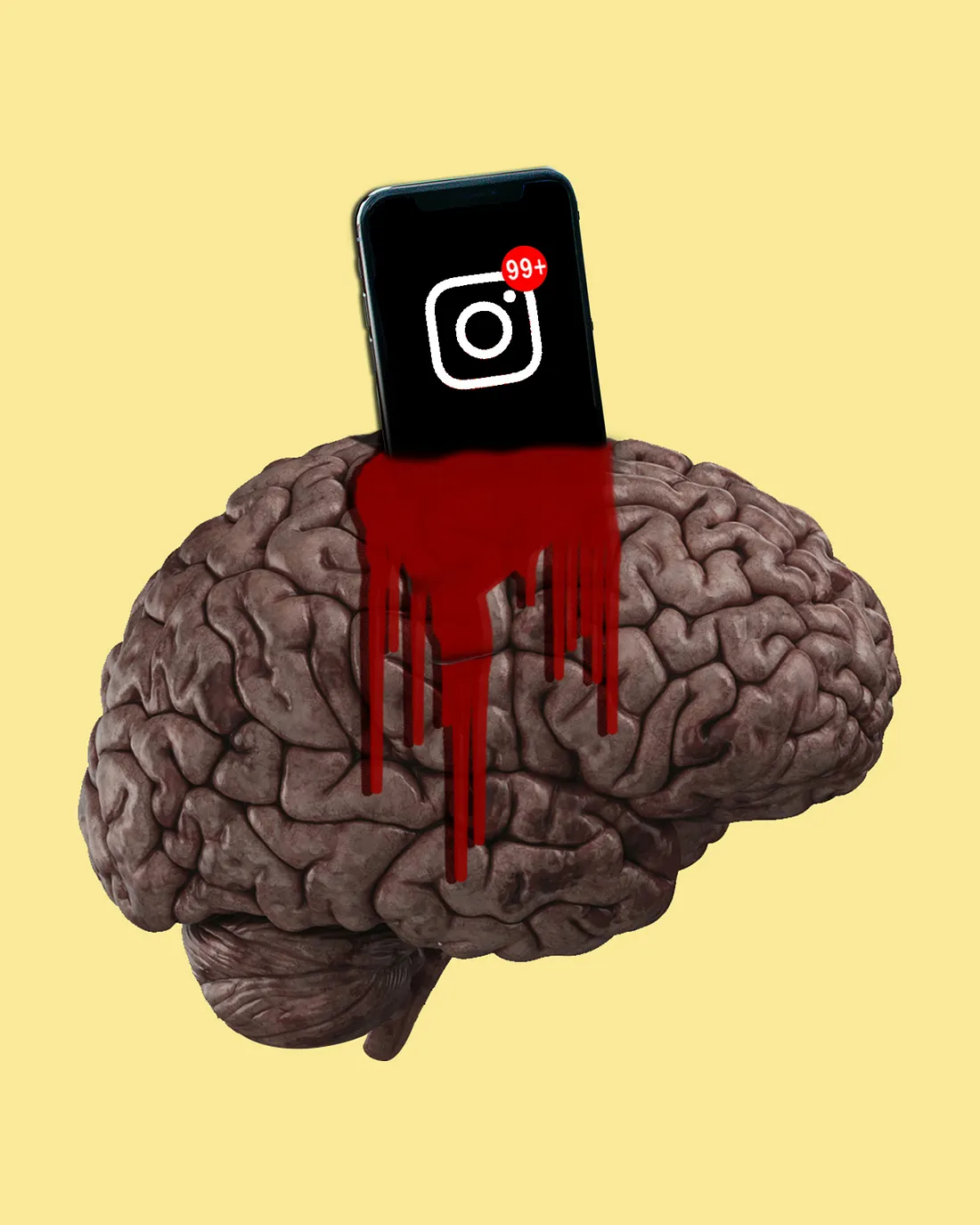
Whether it is junk food, scrolling, or even "fake" productivity in the form of watching motivational videos, it all raises dopamine. Then comes the crash. Your baseline drops. If you do this often enough, your brain adjusts. It starts to expect repeated highs.
And if you don't get them? You feel level. Boring. Dull.
That is why you cannot focus. That is why the act of picking up a book feels like lifting a boulder. That is why ten reels of "how to be productive" create a high, but the work itself feels too intimidating.
You cross the line. You read self-help the way you used to read distractions. You feel inspired, but you don't do anything. That is the ultimate guilt.
You now know better. You know what to do. You just don't do it. The gap between who you are and who you ought to be eats away at you.
I think of the older generations. They could sit for hours with one book. Life for them was difficult, but they were not distracted by cheap entertainment. They had fewer options, so their minds were tougher.
We have done the opposite. We have placed our minds in front of a buffet of instant gratification. It is little wonder why we are burnt out, bored, and numb to our own freedom.
Think of dopamine like nutrition. When you fast for 24 hours, even a small meal is flavorful and filling. You cleared the space for hunger.
Dopamine is the same. If you are continually nibbling on pleasure by scrolling and binging, you never give your brain real motivation. But if you deprive yourself of the instant fix for long enough, the hard work becomes rewarding. You will want to read. You will want to focus. You will want to create.
But first, you must let your brain get hungry again.
There are two ways to fix this.
You can go cold turkey. Quit all high-dopamine activities like Instagram, junk food, YouTube, and Netflix for a few days or weeks. Give your brain a rest.
Or you can taper. Gradually transition to less dopamine-dense activity. Switch from scrolling to reading. Switch from watching to writing. Move from dopamine snacks to slow meals.
The idea is not to banish pleasure forever. The idea is to deserve it.
You control your dopamine. You are the master of your mind. A high baseline equals high drive, focus, and satisfaction. A low one means you will always float aimlessly in the fog.
When I quit using Instagram, I didn't just quit wasting time. I quit being told what to do.
I realized how addicted I had been to the theory of growth, but not the mechanics of it.
I still fall short. I still trip. But I do not allow algorithms to write my identity anymore.
Discipline is not about being flawless. It is about picking yourself over the dopamine, day in and day out.
There are some dreams that don't really belong to you anymore they belong to the kid you used to be.
For me, seeing MS Dhoni bat wasn't just about cricket. It was about the days when the only language my father and I spoke fluently was the game. And Dhoni? He was the reason we believed in miracles. He was calm under pressure and was the man who made winning feel inevitable. He didn't just finish games. He finished doubts.
"Mahi hai toh Mumkin hai."
But like cricket, life doesn't always follow the script you imagine.
Before I ever got the chance to see him in his prime, MS Dhoni stepped away from international cricket. There were no live stadium moments with a blue wave of fans chanting his name.
The dream quietly faded like a match that ended without a last over. But the IPL kept the hope alive.
On April 5th, 2024, I joined a virtual queue of thousands. We were all scrambling for a ticket to watch the Chennai Super Kings on April 8th at Chepauk. Most tickets vanished in seconds. The rest were way out of my budget. Somehow, and I still don't know how, I got one.
One seat. One shot.
It was chaos after that - no planning, no reservations. I just booked a ticket and decided to go with the flow. Honestly, I had the worst travel experience for the next 27 hours, but after all, I made it to Chennai. The heat was heavy, but the air felt different. The city wasn't just wearing yellow; it was breathing it.
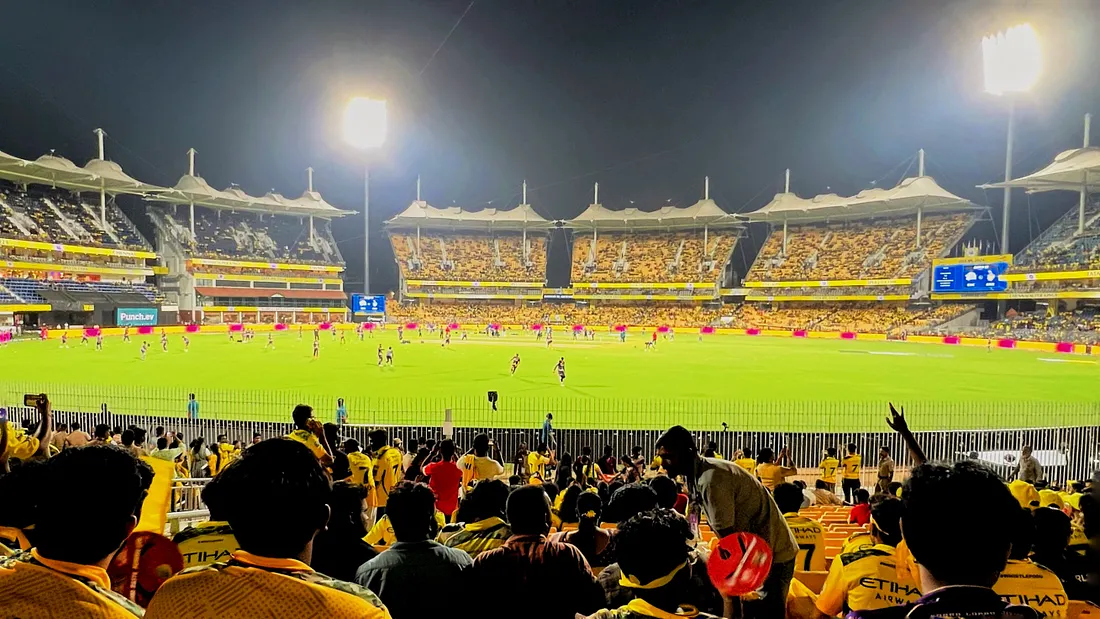
And then, the moment came.
CSK was cruising and the match seemed almost done. Shivam Dube got out. Suddenly, the crowd around me roared.
"DHONI! DHONI! DHONI!"
The chants got louder. We expected Dhoni, but we got Jadeja. The crowd let out a collective sigh.
But then I saw Jadeja turning back.
From the dugout, he walked out. MS Dhoni. Number 7.
I have never heard a roar like the one that followed. It didn't sound like joy. It sounded like faith being rewarded.
I stood up. Everyone did. People were screaming, crying, and laughing. It felt like watching a god who decided to walk among us mortals for one more time. He played a few balls. He scored a few runs.
CSK won comfortably. The stadium emptied out, but I didn't want to leave my seat.
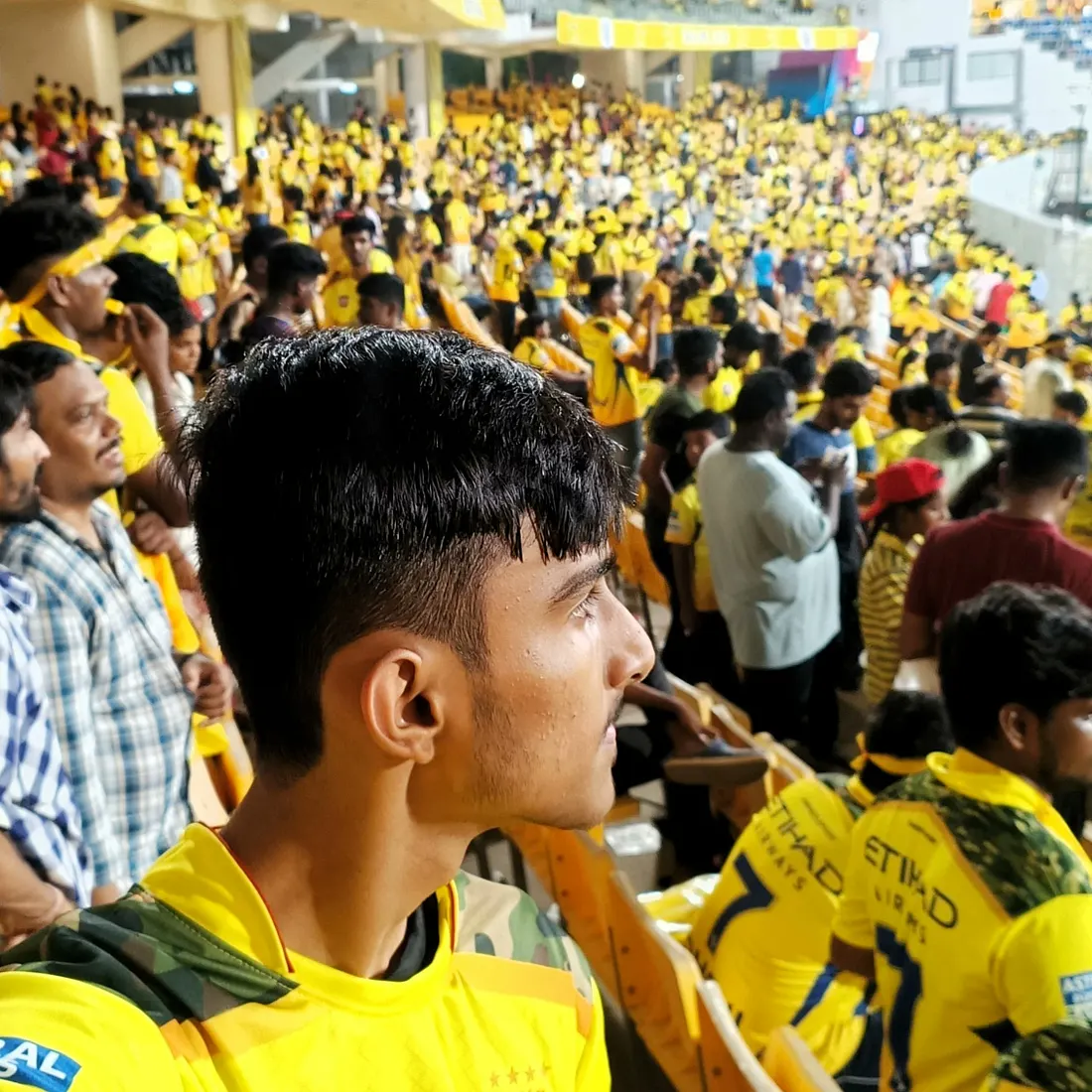
Deep down, something didn't feel complete.
I had waited so many years for this, yet I wasn't fulfilled. That was the moment I realized something I didn't expect. My love for Dhoni was never just about the game of cricket.
It had changed because I had changed.
Somewhere along the years, my hero had evolved from a finisher to a philosopher.
Dhoni doesn't teach you how to hit a six. He teaches you how to stand still when the world is screaming at you. He teaches you that "Captain Cool" isn't about lacking emotion; it's about feeling everything and choosing to stay quiet.
Control the controllables.
I admire how he remains rooted even under the heaviest pressure. There are no outbursts and no drama. Just this quiet confidence and a deep belief in the process.
That night in Chennai, I saw the legend. But what I really long for is to one day meet the man. Not to take a selfie. Not for an autograph. I want to stand in front of him as someone who has made something of his life and say,
"Sir, you don't know me. But unknowingly, you've taught me how to live."
Some dreams are loud. Some whisper from the backseat of your life.
Watching Dhoni live was a loud dream. But wanting to become someone who deserves to meet him? That is the quiet one I carry every single day.
And maybe that is the one that will matter more.